
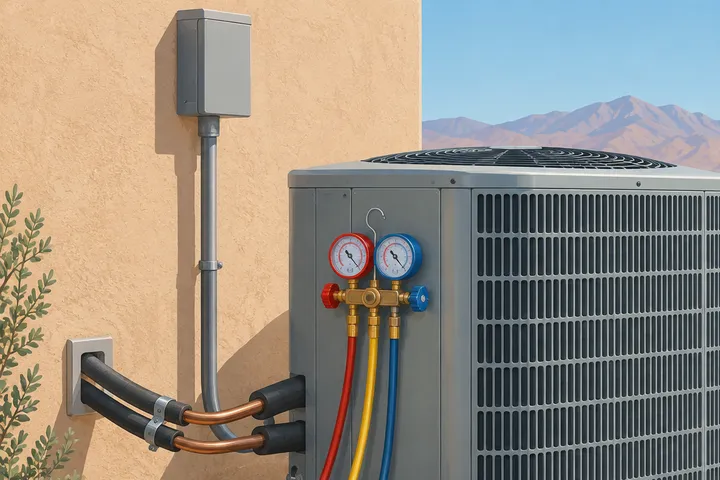
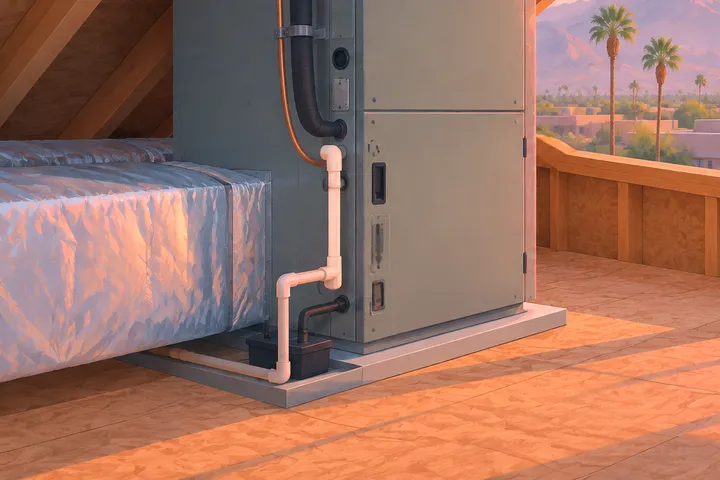
A long run does not prove a low charge
A system that runs longer than it used to is worth checking if comfort has changed. But runtime alone cannot tell you how much refrigerant is in the circuit. Dirty coils, airflow restrictions and other faults can reduce cooling.
Tell the provider whether the system still produces cool air, whether airflow feels weaker and whether the house eventually reaches the thermostat setting. Those details are more useful than asking to "fill the Freon."
Bring the service history into the conversation
If the unit has been recharged before, look for the last invoice. The refrigerant type, quantity and any note about a leak help explain what was done. A repeated need for refrigerant deserves more than another top-off.
If you rent, contact the landlord before authorizing costs. If you own the home, check equipment warranty terms before approving work. This site does not determine warranty coverage.
Confirm service at the property
Give the provider the actual property city and ZIP code, not the location of your mobile phone. A Coachella page or telephone area code does not establish contractor coverage. Ask the company to confirm availability, equipment type, visit fees and access requirements.
Make the first checks simple and safe
Set the thermostat to Cool, fan to Auto and the temperature below room temperature. Look at an accessible filter and replace it according to the equipment instructions if dirty. Keep supply vents and return grilles clear.
If you see ice, smell burning or have repeated breaker trips, stop operating the equipment and get professional help. Do not keep resetting a breaker or try to add refrigerant yourself.
Approve a clear scope of work
Ask for an itemized estimate covering diagnosis, leak detection, repair and refrigerant. Ask what warranty applies and what checks will be made afterward. The receiving company, not this website, sets prices and appointment availability.

Sources behind this guide
General guidance, not a diagnosis of your equipment.