The equipment label matters
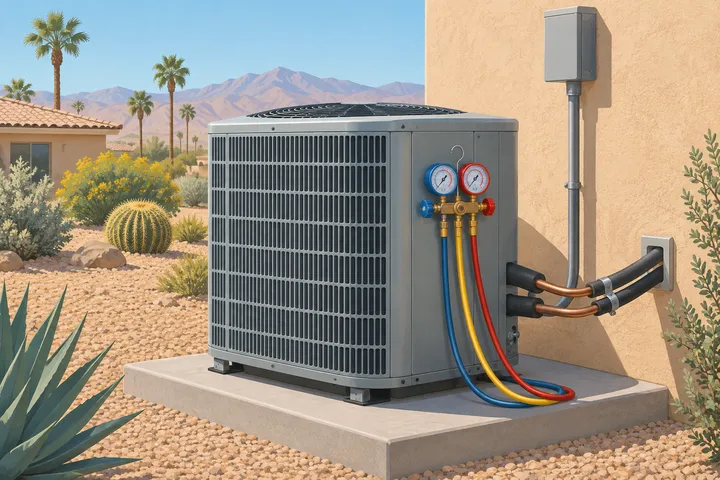
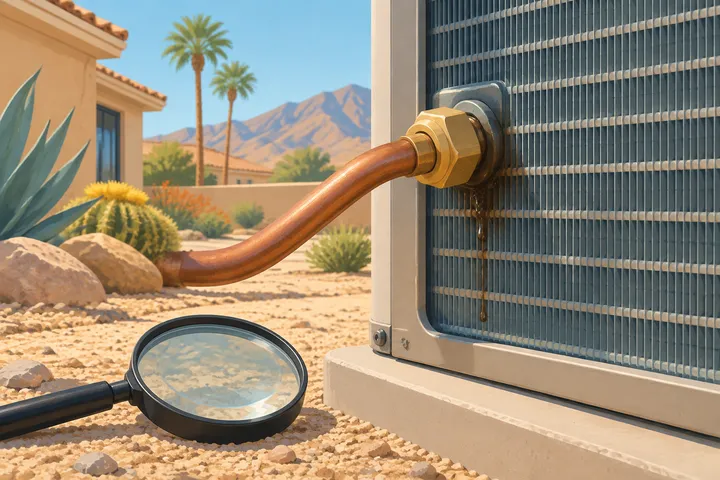
Freon is often shorthand, but does not identify the fluid your home system needs. Read the label from a safe position or ask the provider to identify it.
Do not choose a product because the name sounds familiar or a video shows a hose connecting to a valve. The correct refrigerant depends on the equipment design.
DIY cans are the wrong starting point
Home refrigerant work requires appropriate EPA Section 608 certification. Connecting gauges, adding refrigerant and opening the circuit are not ordinary homeowner maintenance.
You can check thermostat settings and an accessible filter. Leave lines, valves and internal electrical parts to a qualified professional.
Make your call clear
Say home central air conditioning or home mini-split, then give the property city, ZIP and symptom. That avoids a vehicle-AC conversation and helps the provider confirm whether the job is appropriate.
Read search results with the system in mind
A product listing for a recharge can, a vehicle repair video or an auto service map result answers a different question from a home cooling problem. The shared phrase "AC recharge" does not make the products, equipment or professional requirements equivalent.
For residential help, use the equipment description in your search and your call. "Home central AC blowing warm air" is clearer than "Freon refill." If it is a ductless system, say that. When someone answers, confirm they handle the type of home equipment you actually have.
A familiar connection is not a safe invitation
A visible service fitting does not turn refrigerant work into a routine homeowner check. EPA lists activities affecting the refrigeration circuit, including attaching gauges or hoses, among tasks requiring appropriate certification. Do not use a fitting or a kit hose as a way to experiment.
If you want to be useful before the appointment, gather observations instead: the thermostat setting, whether airflow changed, which rooms are uncomfortable and any earlier repair invoice. The provider can use that information without you opening the circuit or deciding which fluid belongs in it.

Sources behind this guide
General guidance, not a diagnosis of your equipment.